

AI Certifications - Should You Be Getting Them?
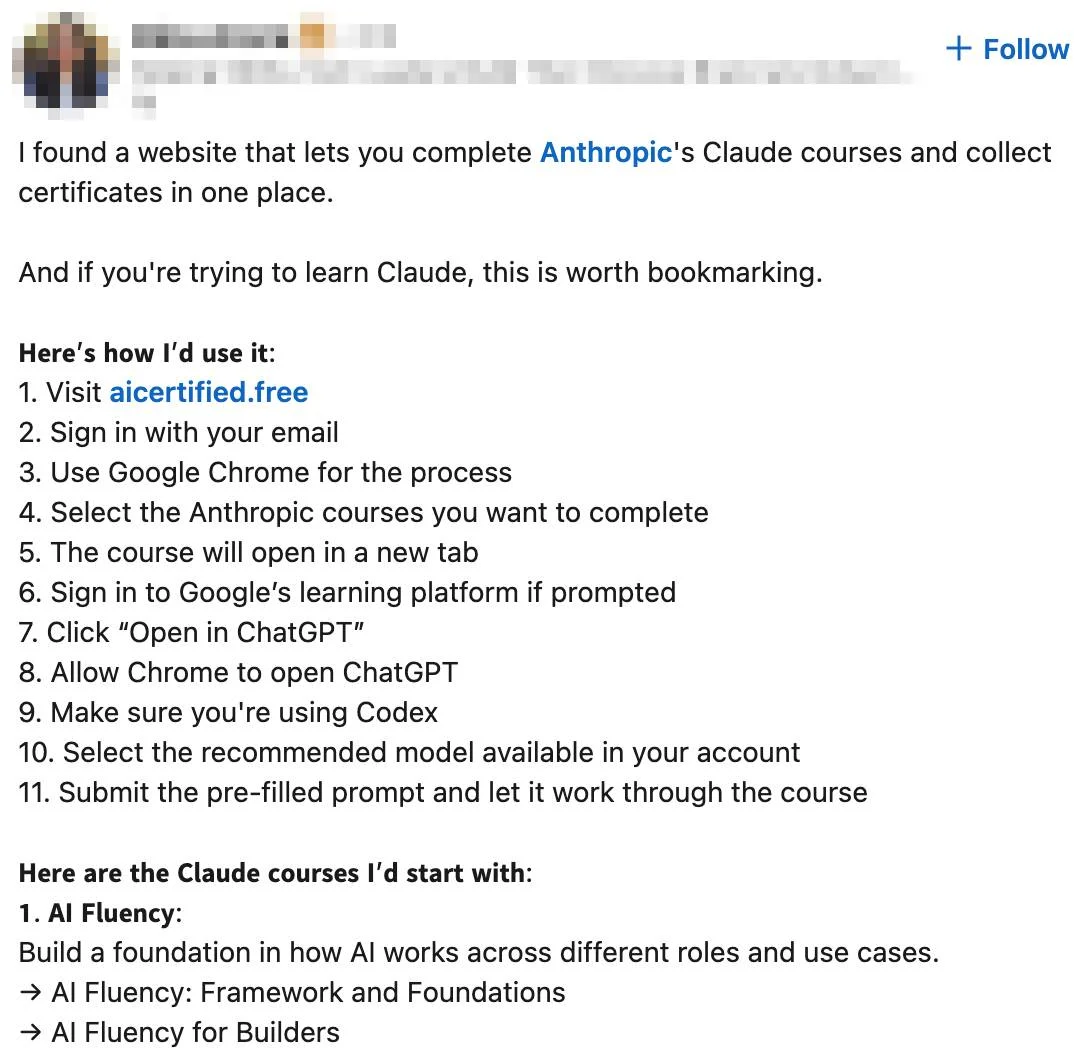
Saw someone recommending this AI certification site on LinkedIn that aroused my interest. A quick check with Gemini gives this:
aicertified.free is a free automation tool created by AI educator and content creator Ruben Hassid. It is designed to automatically complete online AI certification courses—such as those offered by Google Cloud and Anthropic—on your behalf, allowing you to earn official certificates without actually doing the coursework.
Why ChatGPT is required:The website requires access to your ChatGPT account because it uses ChatGPT as the "brain" to pass the courses. When you start a course through the tool, it feeds the course content and multiple-choice questions (MCQs) directly into ChatGPT. ChatGPT then figures out the correct answers and automatically completes the assessments for you.
Hassid built the tool partly as a critique of how the tech industry handles basic credentialing. He noted that if an AI model can effortlessly pass the exams required to earn these certificates, the certificates themselves hold very little actual value.
So I asked again: "Then what's the point of completing those certs?":
The value of these specific online certificates—particularly the introductory, multiple-choice ones—is highly debated in the tech industry.
Hassid's demonstration points out a fundamental flaw: if a test only assesses rote recall through multiple-choice questions (MCQs), it proves you can pass a test, not that you can do the work. In a landscape where AI itself can instantly ace these quizzes, hiring managers are increasingly viewing them as low-value credentials.
However, the industry distinguishes between different types of AI certifications:
- Low-Signal Certificates (Like the ones Hassid automated): Introductory "Foundations" or "Generative AI for Everyone" certificates that are unproctored and MCQ-based. While they show you spent time reading about AI, they carry very little weight with employers.
- High-Signal Certifications: Rigorous, proctored exams from major cloud providers (like the Google Cloud Professional Machine Learning Engineer or AWS Certified Machine Learning Engineer). These remain highly respected because they test production-relevant skills, cloud architecture, and practical application, which are much harder to automate.
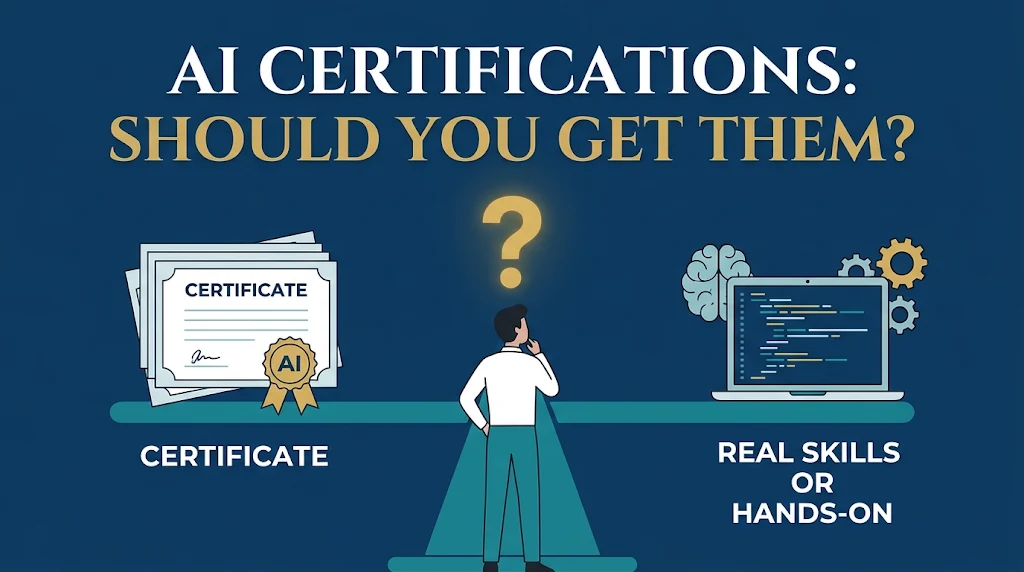
The bottom line for hiring:In 2026, 78% of hiring managers stated they value a portfolio of applied projects over certifications. If your goal is to learn the concepts, taking the free courses can be beneficial. If your goal is to impress an employer, time is better spent building a GitHub repository of deployed AI projects or passing a rigorous, proctored engineering exam.
So if you're going for any AI certifications, it's worthwhile to go for those that are "proctored" and close to one's domain area. For example, I'm primarily a Web Developer and one of the AI certifications I'm looking at now is the Claude Certified Developer - Foundations (CCDV-F). According to Gemini:
The Claude Certified Developer - Foundations (CCDV-F) is the strongest match for your combination of software building and technical instruction.
Here is how the three tracks align with your work:
Developer Foundations (The Best Fit)This track is built specifically for engineers creating applications and agent systems. It heavily tests the Claude API, tool use, managing structured outputs, and operational reliability. Because you are actively scaffolding full-stack web projects and SaaS platforms, this credential directly validates your hands-on engineering capabilities. As a trainer, holding a Developer certification proves you can actually build the technology you are teaching, giving you the highest technical credibility. This exam costs US$125.
So, will I be taking this Claude Certified Developer? Hmmm, most probably, I must say. If I do, I'd be sure to share it here!
Meanwhile, I still believe that the best "certifications" or credentials is a portfolio of deployed projects ... I'm building a WebAR-related SaaS currently and is likely to be soft-launch end of the year. Moving forward, I'd given myself the KPIs of building and deploying 1 SaaS/project per quarter starting 2027!
I'll share all my learning and projects here! Stay tuned!